Understanding Eating Habits and Body Weight Dynamics
An educational exploration of the neuroscience, behaviour, and environmental factors that shape our food choices and dietary patterns.

Our Mission
TheHabitShiftUK is an independent, evidence-based educational resource dedicated to explaining the mechanisms behind eating habits and their relationship to body weight. We present scientific findings without prescriptive recommendations, recognising that individual responses to dietary patterns vary significantly.
Core Topics
Habit Formation Neuroscience
The brain's reward system plays a fundamental role in habit formation. Repeated behaviours create neural pathways that eventually become automatic, requiring less conscious effort. This process is essential to daily functioning but also explains why dietary patterns, once established, can be difficult to alter without sustained intervention.
Explore this concept →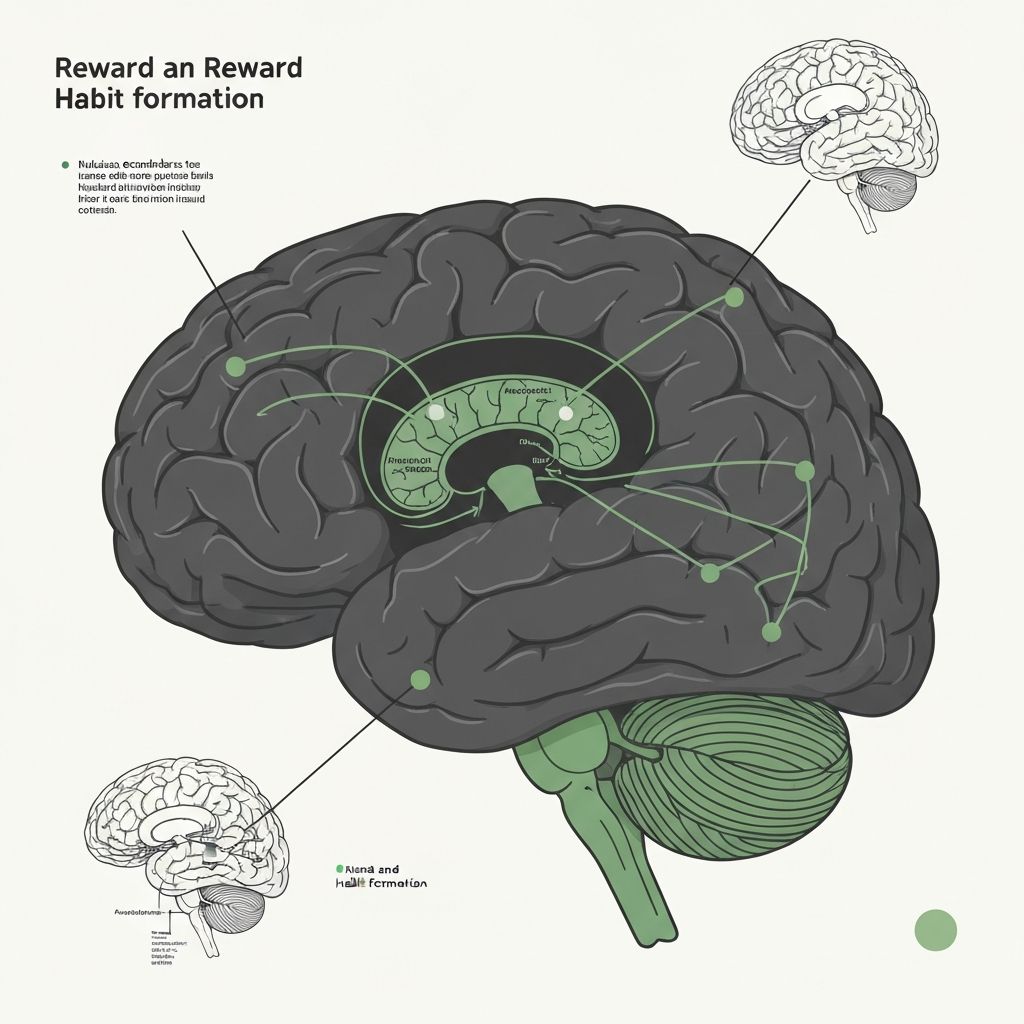
Contextual Triggers in Eating
Environmental cues—the kitchen layout, time of day, social setting—act as automatic triggers for eating behaviours. Research suggests that contextual factors can be as influential as physiological hunger in determining food intake. Understanding these triggers reveals why changing eating patterns requires addressing not just willpower, but also the surrounding environment.
Dive deeper →
Repetition & Reward Loops
Habits strengthen through repetition. Each time a behaviour is repeated in a familiar context and followed by a reward—whether nutritional satisfaction, taste, or comfort—the neural loop solidifies. Over time, this automaticity reduces decision-making, which explains both the efficiency and the inertia of habitual eating patterns.
Learn more →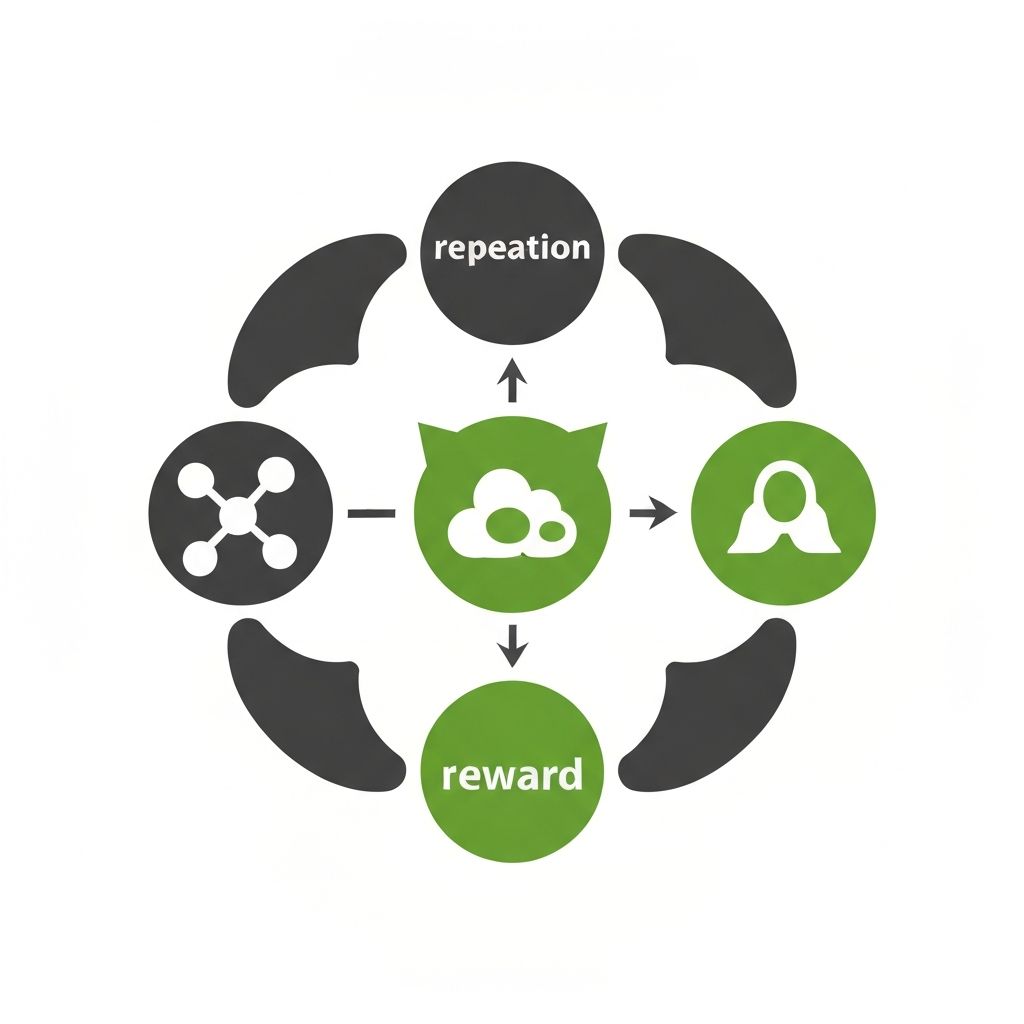
Environment Shaping Behaviour
The physical and social environment shapes eating patterns more than many people realise. Food availability, storage visibility, social norms, and household composition all influence dietary intake. Subtle environmental adjustments can shift patterns without relying solely on individual willpower or conscious choice.
Discover more details →
Emotional & Cognitive Influences
Mood, stress, cognitive load, and emotional states significantly affect food choices and consumption. Research indicates that decisions about eating are intertwined with emotional regulation and psychological needs. Understanding these connections highlights why purely dietary interventions may have limited effectiveness without addressing the broader psychological context.
View supporting evidence →
Energy Balance & Habitual Intake
The relationship between habits and energy balance is bidirectional. Habitual eating patterns significantly influence total energy intake—often independently of conscious awareness. While individual metabolic variation exists, accumulated research suggests that habitual dietary patterns account for a substantial portion of variation in energy balance across populations.
Key Observations from Research
- Habitual food choices account for approximately 60–70% of daily intake consistency
- Environmental modification shows sustained effects on consumption patterns
- Awareness of habitual patterns often precedes any behavioural adjustment
- Social and cultural contexts normalise portion sizes and eating frequency
- Individual responsiveness to dietary changes varies due to physiological and psychological factors
Explore Further
Dive into our detailed articles exploring the science of eating habits, research findings, and the contextual nature of dietary behaviour.
Frequently Asked Questions
Habits are automatic behavioural sequences triggered by contextual cues and requiring minimal conscious effort or decision-making. Conscious choices involve deliberate evaluation and consideration. Most daily eating involves habitual responses rather than active decisions. The transition from conscious to habitual behaviour occurs through repetition and neural reinforcement.
Habitual patterns can be modified, but the process is often gradual and requires sustained intervention. Research indicates that environmental modification, contextual changes, and repeated alternative behaviours can establish new patterns. However, individuals vary significantly in their responsiveness to such interventions, and the mechanisms underlying change remain complex and multifaceted.
Emotional states influence both food choice and intake. Stress, boredom, and sadness can trigger eating as a form of emotional regulation. The relationship between mood and appetite is bidirectional: emotional states influence what and how much we eat, and eating patterns can, in turn, affect mood and cognitive function. Individual responses vary considerably.
Awareness of habitual patterns can be a first step toward change, but awareness alone does not guarantee modification. Behavioural change typically requires consistent effort, environmental support, and often extended time periods. The relationship between knowledge and behaviour is complex; many individuals possess awareness of their habits without achieving sustained change.
No. Research demonstrates that eating behaviour is influenced by a complex interplay of neural mechanisms, environmental factors, social context, emotional states, and individual physiology. While individual agency exists, attributing all dietary outcomes solely to willpower oversimplifies the multifactorial nature of eating behaviour and ignores the substantial influence of environmental and contextual factors.
Our goal is to provide evidence-based educational information about the science of eating habits and body weight dynamics without prescribing specific behavioural outcomes. We aim to explain mechanisms, present research findings, and foster understanding. We do not offer personalised recommendations, dietary programmes, or promises of specific results. Information is presented for learning purposes only.
Continue Exploring
Visit our articles section for in-depth exploration of eating habits, research summaries, and scientific perspectives.
Explore Articles